
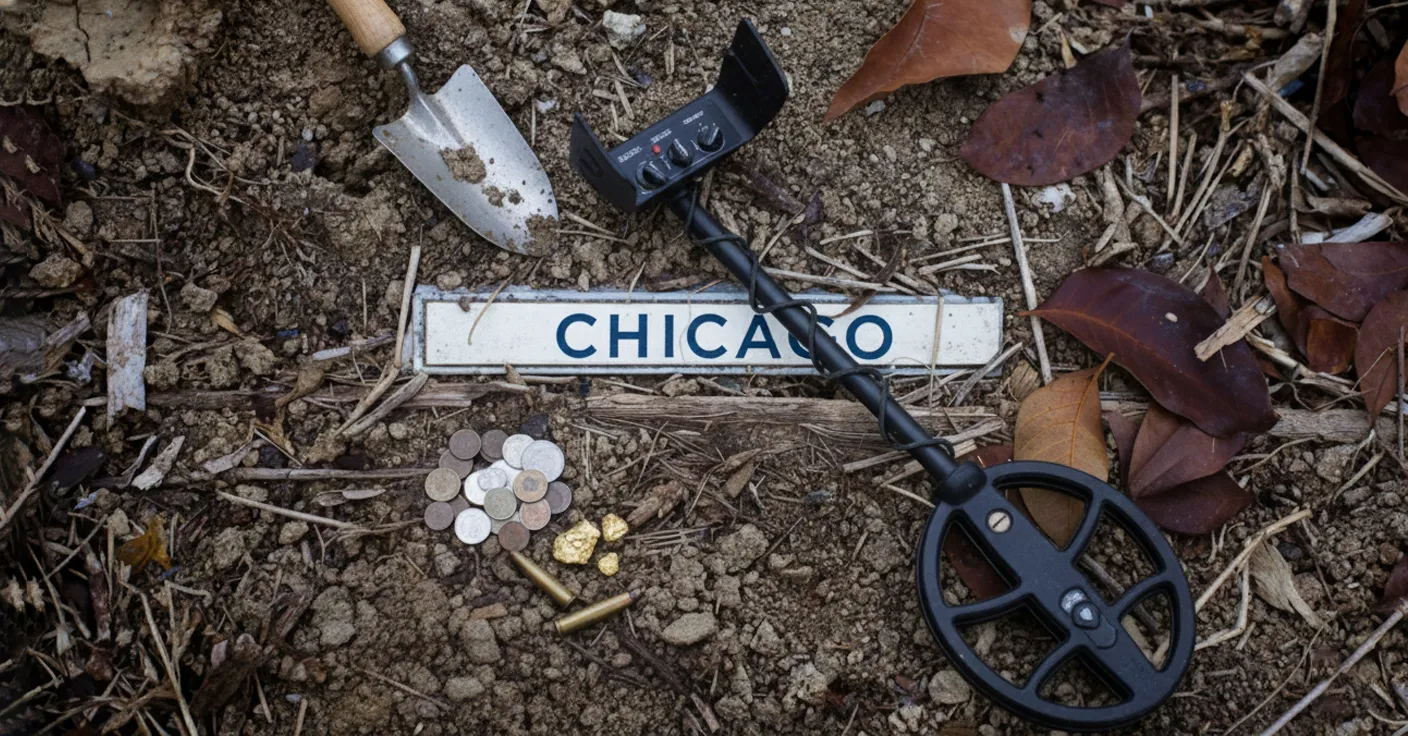
If you’re a beginner eager to discover hidden treasures, Illinois is a great place to start your metal detecting journey. The state offers a rich combination of old towns, abandoned routes, busy parks, and scenic riverbanks that often hide coins, relics, jewelry, and even traces of natural gold. Many newcomers assume metal detecting is simply about swinging a machine, but the real excitement begins when you uncover items that tell stories about the people who lived here many years ago.
This guide will help you explore Illinois with confidence by sharing the best beginner-friendly spots, the essential laws you must understand, the gear you should bring, and the techniques that improve your chances of success.
You will also learn about Illinois treasure legends, gold-hunting possibilities, and a clear roadmap for your first ten hunts. Each section is built for beginners who want clarity, practical advice, and real value as they start this rewarding outdoor hobby.
Table of Content
ToggleWhy Metal Detecting in Illinois Is Great for Beginners
Illinois offers a diverse landscape that includes parks, fields, riverbanks, forests, and historic grounds that are perfect for metal detecting throughout the year. The soil is usually easy to dig, the locations are beginner-friendly, and the state’s long history provides great opportunities for exciting finds.

What You Should Know Before Hunting In Illinois
Before you start, you should understand the rules, land types, and basic responsibilities that protect both the environment and your hunting rights. These points help you stay safe while ensuring the hobby remains welcome in public spaces.
Understanding Illinois Metal Detecting Laws
Illinois allows metal detecting in several areas, but the rules vary depending on land ownership. Public city parks and school grounds are usually open for detecting, yet many cities have their own policies. You should always review your city or school district website before planning a hunt. You can explore general park information through the official Illinois State Parks website:
State parks, state historic sites, and nature preserves follow much stricter regulations, and many locations fully prohibit metal detecting because they protect archaeological resources. You can confirm rules for these areas using the following official pages:
Private land can be detected only when you have written permission from the owner. This protects both the property and your safety during the hunt.
Several places in Illinois are completely off-limits for detecting. These include cemeteries, Native American sites, burial grounds, archaeological zones, and marked historical areas. Disturbing these protected places can lead to legal trouble, so it’s important to avoid them entirely.
The Ethical Rules in Illinois
Ethical detecting helps you protect the environment while keeping the hobby enjoyable for everyone. You should always dig clean plugs, protect the roots of nearby plants, and avoid damaging the lawn. Carefully replace each plug and press it down so the grass grows back naturally.
You should also collect any litter you uncover, including nails, cans, and sharp metal fragments. This keeps parks safe for families and shows respect to other visitors. Try to stay polite and maintain distance from people relaxing nearby, especially in busy recreational spaces.
Discovering Lost Treasure and Local History
Illinois has a long and fascinating history that gives beginners real chances to uncover meaningful relics. Many early settlers traveled across the state during the pioneer era, and some abandoned tools, coins, and personal items that now sit beneath the soil.
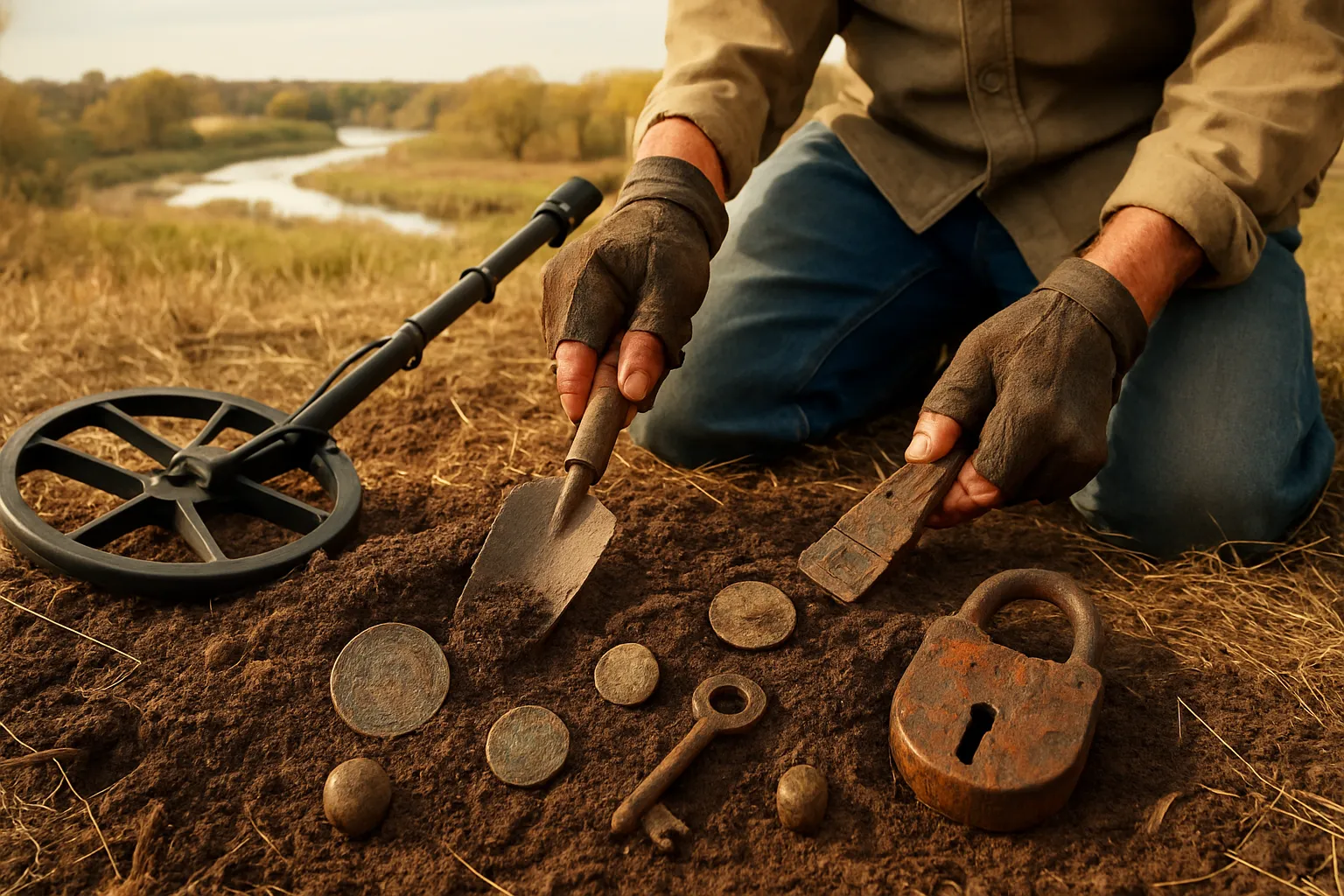
Illinois also played an active role during the Civil War, and you may uncover related relics such as buttons, musket balls, or military hardware in the right locations.
Railroads shaped Illinois, and many old tracks produced interesting finds like locks, tags, tokens, and metal tools. These pieces offer a small glimpse into daily life decades ago. Several local legends mention lost treasure hidden near river routes, abandoned towns, and historic trading paths.
Areas along the Mississippi River, Ohio River, and old mining settlements attract hobbyists who enjoy combining local history with the thrill of discovery.
These stories make detecting more exciting because you are not only searching for metal objects. You are exploring pieces of Illinois heritage that have been buried for generations.
Starter Spots for Your First Hunts in Illinois
Starting with simple locations helps you learn your machine, improve your digging technique, and understand tones without feeling overwhelmed. These places offer steady finds and allow you to practice efficiently.
Easy Places to Practice
Modern parks, playgrounds, and sports fields are ideal for quick hunts because many people visit them daily and often drop coins, earrings, rings, and small metal items. These areas typically have clean soil that helps your detector produce clear signals.
Practicing here teaches you common ID numbers, simple tones, and good plug-cutting habits without the pressure of hunting complicated historic sites.
Older Grounds and Riverbanks for Starting
Older parks, fairgrounds, and farm fields often contain deeper or older relics that give you a taste of Illinois history. Plowed fields reveal items after harvest, and riverbanks expose hidden ground when water levels drop during dry seasons.
Always follow the rules, get permission for fields, and avoid protected land. These spots reward patient beginners with exciting finds like relics, old coins, and small pieces of household history.
Starter Spots for Your First Hunts in Illinois
Location Type | Why It’s Ideal for Beginners | Examples |
Modern Parks | Simple signals, clean soil, constant fresh drops | Grant Park, Crystal Lake parks |
Playgrounds | Frequent small finds from daily activity | Community school playgrounds |
Sports Fields | High foot traffic and steady modern targets | Soccer complexes, baseball diamonds |
Picnic Areas | Great chances for jewelry, coins, and keys | Forest preserve picnic shelters |
Essential Metal Detecting Gear for Illinois Beginners
Before heading out, you should prepare the right gear so you can handle different soil types, dig clean plugs, and recover targets safely. Good equipment helps you work efficiently and increases your success rate during every hunt.
Choose the Best Metal Detectors for Illinois Soil
Beginners should choose detectors with simple controls, clear displays, and reliable trash discrimination. Illinois soil contains nails, foil, and bottle caps, so good filtering helps you avoid unnecessary digging. Weather resistance is also useful because unexpected rain is common.
Beginner-friendly metal detectors for Illinois include:
- Garrett ACE 300
- Nokta Simplex+
- Fisher F22
- Minelab Vanquish 440
These models work well in parks, athletic fields, beaches, woodland trails, and even light riverbank areas.
Coils, Digging Tools, and Accessories
Coils: Small coils help you separate valuable signals from trash in busy parks. Larger coils reach deeper layers in fields and older grounds.
Tools: Use a sturdy digging knife, a hand trowel, a plug cutter, and a sand scoop for water areas. These tools help you dig cleanly and protect the roots beneath the soil.
Accessories: A pinpointer speeds up recovery, while gloves protect your hands from sharp objects. A finds pouch, knee pads, and a soft brush also help during longer hunts.
Can I Really Find Gold in Illinois?
Gold has been found in Illinois, although usually in small flakes created by glacial movement and scattered through several river systems. Historical records mention minor gold mining efforts, including activity near the Illinois Creek area. Gold here rarely appears as large nuggets, but beginners can still enjoy searching for placer flakes or gold jewelry in public gathering spaces.
Hot Places to Find Gold
- Placer gold appears in small amounts within rivers shaped by ancient glaciers.
- The Fox River, Sangamon River, Spoon River, and various Mississippi River tributaries contain small deposits.
- Beaches, parks, and swimming areas are excellent places to find dropped gold jewelry.
- Shallow river edges near gravel bars offer good chances when water levels are low.
Settings and Detectors for Gold Targets
- Use higher frequencies when searching for tiny gold flakes.
- Increase sensitivity to detect faint signals underwater or within gravel beds.
- Choose small coils to pick out tiny targets hidden between rocks.
- Dig small, faint tones since gold rarely gives a loud response.
- Move slowly along gravel bars and disturbed river sediment.
Simple Step-By-Step Plan for Your First 10 Hunts
- Research local rules and select a legal beginner-friendly area.
- Set up your detector at home and practice basic swings in your yard.
- Start with modern parks or playgrounds to learn common tones.
- Adjust your sensitivity until signals become clear and stable.
- Practice cutting clean plugs that protect grass and root systems.
- Keep your coil flat and close to the ground during each swing.
- Move to sports fields or picnic areas once you understand basic ID numbers.
- Try older parks or fairgrounds when you feel confident identifying trash.
- Explore riverbanks during low water seasons for relics and natural flakes.
- Record your finds after each hunt to understand patterns and improve faster.
Conclusion
Metal detecting in Illinois is an exciting and beginner-friendly hobby that invites you to explore parks, riverbanks, and historic landscapes while uncovering interesting pieces of the past.
Each hunt helps you learn something new about your detector, the soil, or the history beneath your feet. When you understand the rules, use the right gear, and follow a simple hunt plan, you improve quickly and enjoy every moment outdoors.
Illinois is full of opportunities, so grab your detector, choose a spot, and begin your treasure-hunting adventure today.
Recomended Reading
Related Products For Your Reference






Add comment
You must be logged in to post a comment.