
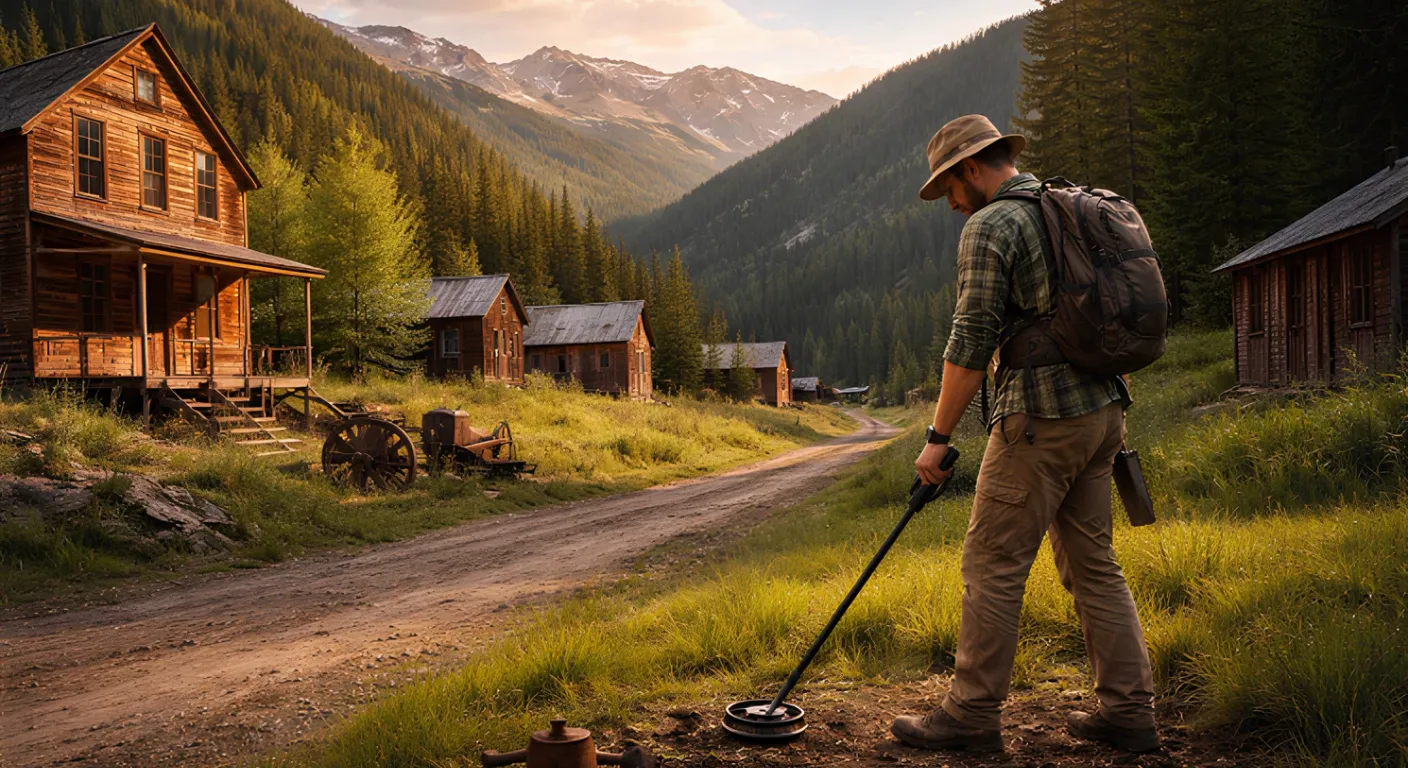
One man walks around with his detector in an empty street where only the wind is heard creaking against idle wooden structures. It is something special when metal detecting in Colorado, since there is literally history right beneath your feet. Hundreds of mining boom towns, railroads, and transitory communities make the state their home. These deserted places provide spectacular views, crumbling structures, and soil filled with scrap metal, coins, tools, and assets of the mines.
It is the dream of many detectorists to find relics that are hidden here, but legal and ethical regulations play a crucial role. Ghost towns are usually located on state or conserved territory, and the cultural resource is safeguarded by the law. In this guide, I will explain the seven ghost towns to investigate, as well as the rules required to follow by the law, and also give tips on the permits and safety measures.
Table of Content
ToggleOverview of Metal Detecting Law and Rules in Colorado
Before making a detecting trip, it is important to comprehend the regulations of Colorado to avoid fines and legal consequences. Although metal detecting may be a good activity, it is not unrestricted.
There are numerous locations with archaeological and historical objects and artifacts that cannot be removed.
Why Laws Matter When Detecting Ghost Towns
Numerous ghost towns in Colorado are not privately owned and frequently are located on federal or state-controlled lands. These sites hold valuable archaeological and historical information relating to mining and initial settlement.
It is unlawful to collect or disrupt these resources without permission. Rules can also be evaded and lead to a fine or seizure of equipment by even the most well-intentioned detectorists.
Adhering to laws only means that historic places will be preserved for the next generation and protect your hobby, as it is a fun activity.
Federal Regulations on Public Land
Most of the Colorado public land is either under the Bureau of Land Management (BLM) or the U.S Forest Service. The metal detecting in both agencies has several restrictions that are significant. The Archaeological Resources Protection Act (ARPA) criminalizes the extraction or destruction of artifacts on federal land without a permit. This also includes objects that are more than one hundred years old.
The U.S. Forest Service also does not allow digging or gathering artifacts related to ancient mining camps or settlements. Though modern coins or items that belong to people are normally not prohibited. Detectorists should not use historic buildings, foundations, and other archaeological sites. Apparently, vacant spaces have concealed items, and care is needed.
Colorado State-Level Protections
The Colorado Historical, Prehistoric, and Archaeological Resources Act at the state level forbids unauthorized movement or damage of safeguarded materials. The history of mining, railroad, and settlement makes many ghost towns eligible for protection. Infractions have fines and possible criminal penalties.
The law in Colorado promotes the detectionists to approach the relevant authorities to help guide them on what to collect. Items that are on the surface can be limited even to the extent of their historical use. Adherence safeguards the hobby and guarantees that the next generation is also able to pursue the history of Colorado.
Top 7 Ghost Towns for Detectorists in Colorado
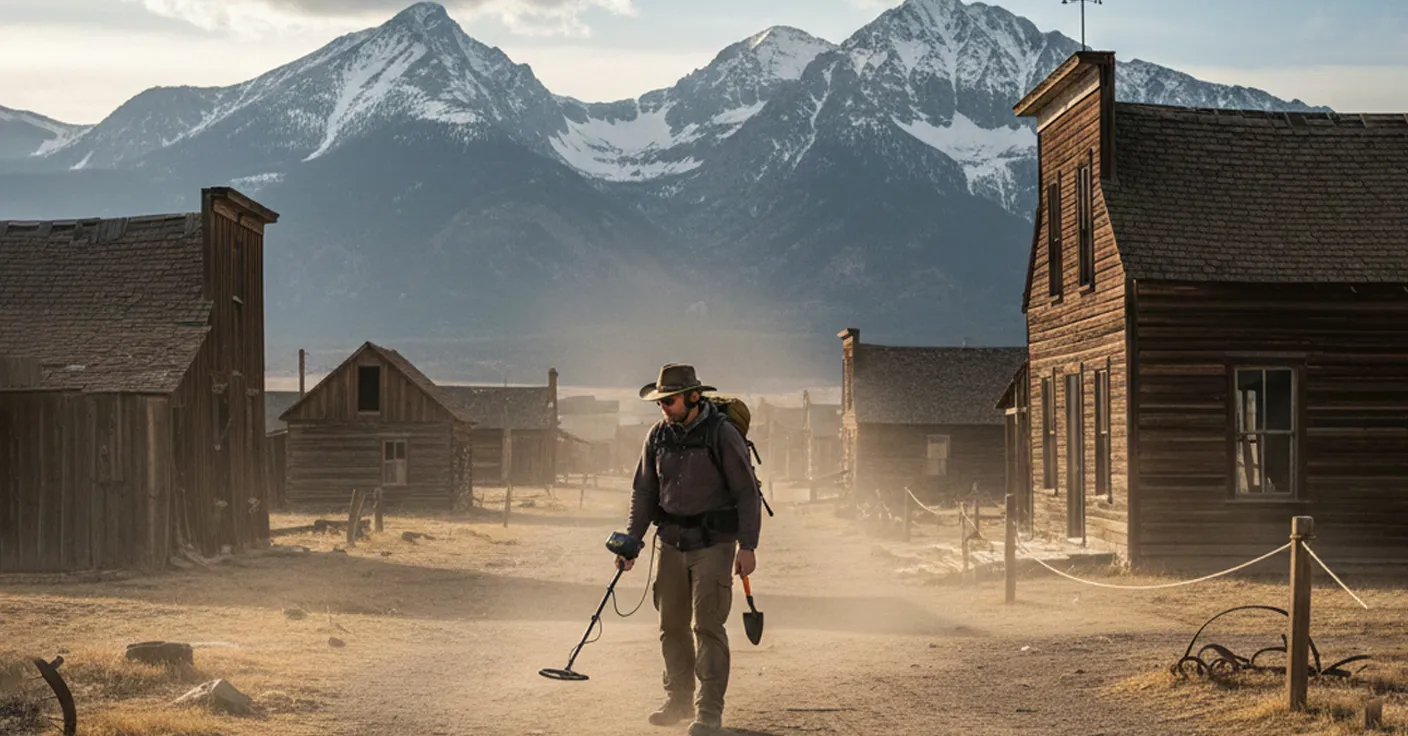
Below are seven ghost towns with strong detecting potential. For each, we provide history, access, and legal considerations. Many offer scenic hiking or driving experiences in addition to detecting.
Ghost Town | County / Access | Key Finds Reported | Legal Notes |
St. Elmo | Chaffee County, road access | Modern coins, surface scrap | National Forest restrictions |
Animas Forks | San Juan County, high-clearance | Mining debris, tokens | BLM land rules |
Ashcroft | Pitkin County, trail access | Modern coins nearby | Historic site protection |
Capitol City | Hinsdale County, seasonal access | Camp scrap, tools | Federal land regulations |
Vicksburg / Winfield | Chaffee County, rough roads | Modern coins, hand tools | Mixed ownership |
Ironton | Ouray County, highway access | Mining hardware | Sensitive historic area |
Independence | Lake County, paved access | Modern coins | Protected structures |
1. St. Elmo
The town of St. Elmo is in Colorado, and it is one of the best-photographed ghost towns, with the presence of alpine mountains. It was a successful railroad and mining center founded in the late 1800s, but it collapsed in the early twentieth century. Currently, numerous wooden buildings have not been ruined, and these are aimed at tourists and hobbyists.
Featured Points:
- Accessible via paved roads, making it convenient for day trips and short detecting sessions.
- Most of the town falls under National Forest Service management, which restricts artifact removal.
- Surface items such as coins or modern jewelry may be collected outside historic zones.
- Focus on trails, campsites, and picnic areas rather than inside preserved buildings.
2. Animas Forks
Animas Forks is located more than eleven thousand feet above sea level and is surrounded by a dramatic mountain terrain. It was established when the silver mining boom was taking place, and in the past, it accommodated hundreds of miners. The manner in which it has few visitors owing to its distance and elevated location maintains its historical environment.
Featured Points:
- High-clearance vehicles are necessary due to steep, rugged access roads.
- Managed by the BLM, so collecting historical artifacts requires permits.
- Modern coins and dropped jewelry are usually legal if they are outside historical structures.
- Weather can change rapidly; snow or rain can make access dangerous.
3. Ashcroft
Ashcroft is situated near Aspen and used to be a large silver mining city. During a short period, its population experienced a peak, then made a decline due to a drop in silver prices. Today, it operates as a protected historic site, with many original buildings still standing.
Featured Points:
- Preserved buildings indicate areas where detection is prohibited.
- Modern coins may be found in visitor parking lots or nearby open areas.
- Always check posted regulations before searching; some trails may require permits.
- The quiet location allows for peaceful detection without crowds.
4. Capitol City
Hopefully, a state capital, Capitol City, was built, but unfortunately, the town did not grow. The setting of the town is a remote place with forested hills. It is not a crowded place, given its restricted accessibility.
Featured Points:
- Seasonal access depends on snow levels; summer is most reliable.
- Federal land protections apply throughout the site.
- Detection must focus on modern surface items rather than artifacts.
- Carry navigation tools, as signage is minimal, and GPS may be required.
5. Vicksburg and Winfield
Vicksburg and Winfield are neighboring cities that have in common the gold mining and construction of railroads. The towns are quite small yet contain mining debris and structures that are left behind.
Featured Points:
- Land ownership varies; verify boundaries before detecting.
- Modern coins may be found near trails and campsites.
- Many areas are still off-limits due to private ownership or historical preservation.
- Avoid unstable structures, including collapsed cabins or mine shafts.
6. Ironton
Ironton has a strategically positioned highway, which is very scenic and easily accessible. The town favored mining and the transport of local mines. A lot of artifacts are still in situ, but a lot of it is secured because of historical preservation.
Featured Points:
- Highway access attracts tourists, so modern coins or jewelry may be found near parking areas.
- Historical artifacts must remain undisturbed under state and federal law.
- Private sections require permission before detection.
- Avoid entering abandoned mine shafts due to safety hazards.
7. Independence
Independence lies near Leadville and preserves cabins, signage, and a mining-era cemetery. Its proximity to roads makes it easy to access year-round.
Featured Points:
- Paved roads allow for relatively safe access even during the winter months.
- Historic structures are legally protected and cannot be disturbed.
- Surface items such as coins may be collected in parking areas.
- Always respect roped-off areas and posted notices.
What Detectorists Can Legally Collect vs. Must Leave
Understanding what is legal keeps you compliant and prevents fines or confiscation of equipment.
Item Type | Modern Coin or Jewelry | Historic Artifact (100+ years) | Buried Historical Relic |
Legal to Collect | Yes | No | No |
Requires Permit | No | Yes | Yes |
Land Contact Needed | Sometimes | Always | Always |
Modern coins or jewelry dropped recently are usually safe to collect. Any object older than one hundred years requires a permit. Buried relics associated with historical settlement or mining always need agency approval.
Safety and Best Practices for Detectorists
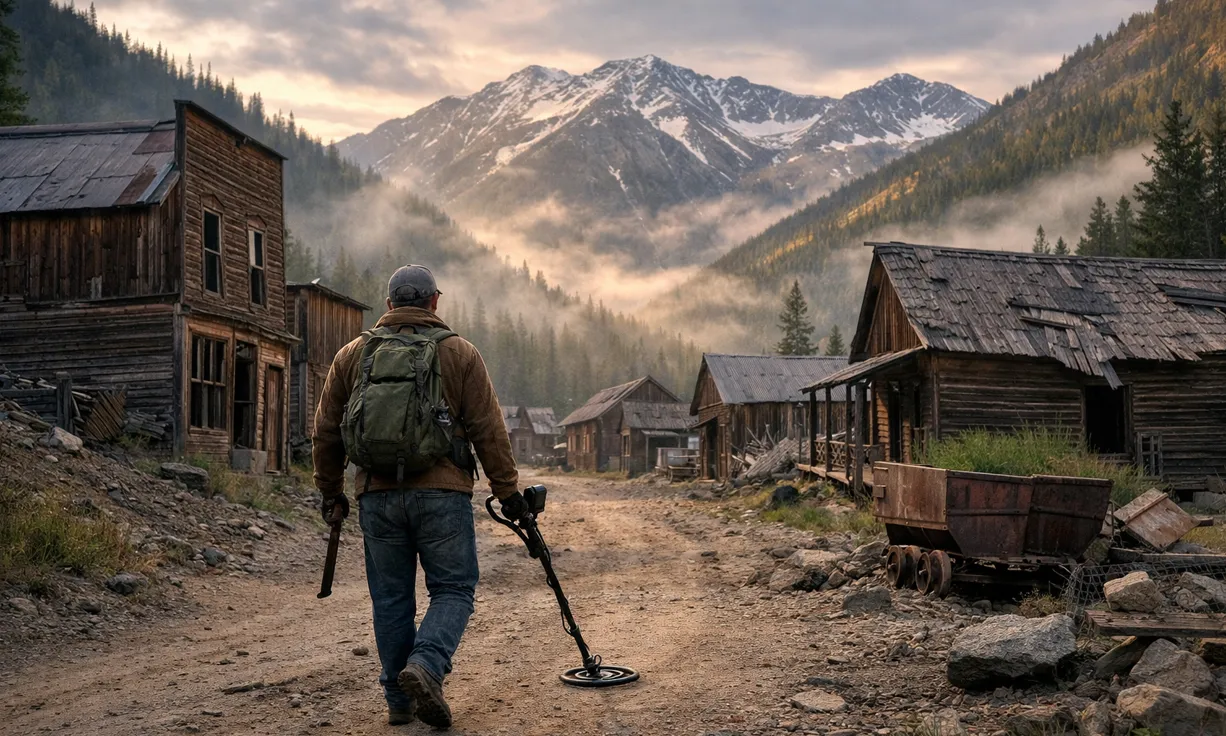
Always confirm land ownership and permissions before beginning. You need to carry written permits or agency documentation. Avoid entering abandoned mines, tunnels, or unstable buildings.
Bring sufficient water, weather-appropriate clothing, GPS or maps, and first aid. Fill holes and leave no trace of your detecting activity. Respect wildlife and avoid damaging vegetation.
Notify someone of your planned route if exploring remote areas. Take extra precautions at high-altitude ghost towns due to thin air and rapid weather changes.
Conclusion
Colorado’s ghost towns offer rich opportunities for detectorists interested in mining and settlement history. These sites combine scenic landscapes, historical insight, and the thrill of finding lost coins or dropped jewelry. Legal and ethical compliance is essential to preserve history and maintain public access.
Detectorists should focus on modern items in permitted areas and avoid disturbing historic structures or archaeological features. Responsible hobbyists can explore these towns safely while leaving the past intact for future generations. If you live nearby, plan carefully, follow regulations, and enjoy discovering Colorado’s hidden history responsibly.
Recomended Reading
Related Products For Your Reference




Add comment
You must be logged in to post a comment.